Revelation of Jesus Christ
From the KJV 1611 with Strong's Concordance
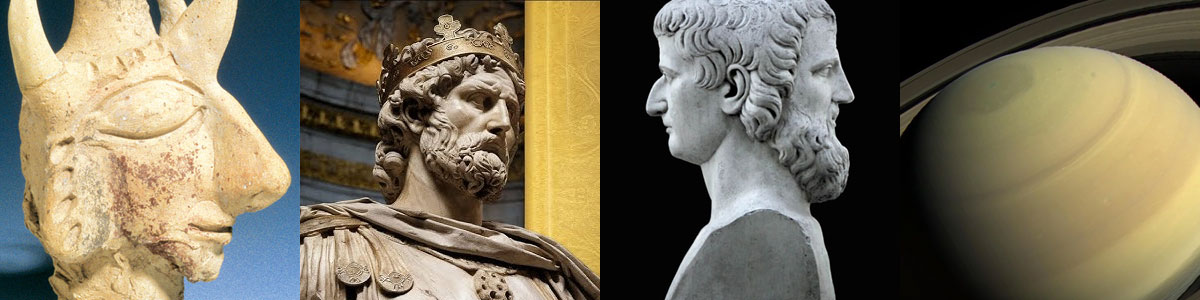
Zepho the Edomite king of Chittim & Italia
The Book of Jasher
According to the book of Jasher, when Jacob died in Egypt, Joseph and his son's and all the Israelites go to bury Jacob at the cave at Hebron in Canaan which Abraham had purchased. When they arrive Esau and his people are there to contest against Jacob being buried in the cave. Esau claims the cave belongs to him. War breaks out between the sons of Jacob and the sons of Esau. Esau is killed in the conflict and his sons are defeated by the sons of Jacob. Joseph takes several of the Edomites captive where they are kept in bondage in Egypt, one of those being Zepho, a chief (duke) of the Edomites who is the grandson of Esau.
We read that Zepho, the son of Eliphaz, the son of Esau, the brother of Jacob (Israel) is a warring character who is determined to get revenge on the sons of Jacob.
Zepho eventually escapes from Egypt and goes to serve Angeas king of Africa where he becomes captain of his host. Zepho encourages Angeas to wage a war against Egypt and the sons of Jacob but is unsuccessful. In chapter 61 enters the character Balaam the son of Beor who was amongst the servants of Angeas. Balaam is just fifteen years old, and was considered very wise and understood the art of witchcraft. Angeas gets Balaam to divine the outcome of a war between Africa and Egypt and the divination does not reflect in Angeas favour, and from this divination, Angeas the king of Africa is swayed to back away from Zepho's war desires on Egypt and the sons of Jacob.
Zepho eventually defects to the people of Chittim (believed to be modern day Cyprus). The people of Chittim are plundered on the revolution of each year by Angeas king of Africa. Zepho goes to help them, and leads an army of the people of Chittim against Angeas king of Africa and his military. Zepho gains the victory saving the people of Chittim, and breaking the annual cycle of plundering. Zepho is then made king of Chittim and over the land of Italia.
Chapter 61:24-25 - The Book of Jasher
And the children of Chittim saw the valor of Zepho, and the children of Chittim resolved and they made Zepho king over them, and he became king over them, and whilst he reigned they went to subdue the children of Tubal, and all the surrounding islands. And their king Zepho went at their head and they made war with Tubal and the islands, and they subdued them, and when they returned from the battle they renewed his government for him, and they built for him a very large palace for his royal habitation and seat, and they made a large throne for him, and Zepho reigned over the whole land of Chittim and over the land of Italia fifty years.
When we look into the story of Herod the Edomite who was a vassal to Rome who became king of Judea, the account in Jasher speaks to a much earlier alliance that was formed between Edom, and the people of Italia. In Jasher we also read of a close relationship between Zepho the Edomite and Balaam son of Beor who becomes a valuable asset through his expertise in witchcraft and divination to predict the outcome of future wars. Jasher portrays Zepho and Balaam as disloyal characters who both flip flop from one tribe to another seeking status and glory through conflicts and wars.
The one common intent between them being the destruction of the sons of Jacob. Zepho's motives appear to be based more around revenge for Jacob gaining his grandfather's birthright and stealing his blessing whilst Balaam seems more obsessed with gaining a victory over the sons of Jacob through his cunning as though they were the ultimate people to defeat by the dark arts. As we read through we find out that Balaam was studying the history of Abraham, Isaac and Jacob, he knew they were God's portion and eventually he would discover how to lure the Israelites away from under God's protection, though to his own destruction. Balaam and his doctrines are warned against in the book of Revelation and Jasher gives us a glimpse into the devious mind of this ancient false prophet.
It is interesting that the early founding history of Rome is surrounded in mythology regarding Romulus and Remus. Romah is mentioned twice in Jasher around the story of Zepho but only as a locational reference. Was Zepho the first king over the land of Italia? The authentication of modern versions of Jasher is questionable as the orginal texts appear to be lost, and so with that, it is worth keeping an open mind. Jasher is a fascinating book nonetheless and well worth a read. The book covers the biblical narrative from Genesis up to Joshua and gives us insight into the tribal contentions and wars between the children of Ham, Shem and Japhet that gave rise to empires throughout ancient history.
The chapters around Zepho in Jasher are 56-65. Zepho is also recorded in Genesis 36:11. In Daniel 11:30 "For the ships of Chittim shall come against him" The king James 1611 version notes these ships as being of Roman origin.
As we get to the end of the book of Jasher we read that after Joshua takes the land of Canaan the people of Chittim go to war with Edom where the Edomites become subjects to Chittim under Latinus then Edom and Chittim become one kingdom.
The Bigger Picture
It is important to note that some of the greater lessons to learn from the biblical accounts are the issues around 'birthright' and the 'blessings'. We read of Isaac favouring Esau and Rebekah favoring Jacob adding to the contention between their offspring. Should a parent favor one child over another? Should a first born receive more than the others? If you want to create division in families and potential future strifes then it is a proven recipe for trouble.
The generations of contentions and wars that were a result of customs and traditions, sparking jealousy and rivalry should make us pay heed on how best to avoid these potential stumbling blocks. Daniel chapter 2:44 comes to mind, it speaks to the kingdom that God sets up being a kingdom that is not left to other people. Jesus gave us the antidote when he said, "Do not store up for yourselves treasures on earth, where moth and rust destroy, and where thieves break in and steal. But store up for yourselves treasures in heaven, where neither moth nor rust destroy, and where thieves do not break in nor steal."
Zepho the Edomite is mentioned in history, primarily in the Hebrew Bible's Book of Genesis (Genesis 36:11, 15) as a son of Eliphaz and grandson of Esau, listed among the chiefs of the Edomite people, signifying his leadership role in early Edomite tribal structure, though specific secular historical exploits beyond biblical genealogies are scarce, with later legends placing him as a king in Italy.
Source: Google Ai
Janus Saturnus Zepho refers to a legendary figure from Jewish traditions, particularly the Josippon, who identifies Zepho, a grandson of Esau, as the founder of Rome, given the name Janus Saturnus, linking him to the Roman god of beginnings, transitions, and the planet Saturn, ruling as a king in Italy before becoming deified and associated with Roman mythology. He's portrayed as an epic hero who escaped captivity in Egypt, led armies, and brought civilisation, bridging biblical figures with Roman history and myth.
Key Aspects of Janus Saturnus Zepho:
In essence, Janus Saturnus Zepho is a mythical figure created by Jewish chroniclers to give their people a heroic ancestor connected to the foundation of Rome, merging biblical genealogy with Roman mythology.
Source: Google Ai
Chit′tim, or Kittim, a branch of the descendants of Javan, the son of Japheth (). On the authority of Josephus, who is followed by Epiphanius and Jerome, it has been generally admitted that the Chittim migrated from Phoenicia to Cyprus, and founded there the town of Citium, the modern Chitti.
Source: Historian, Flavius Josephus.
The name Chittim (or Kittim in Hebrew) refers to the ancient Phoenician city of Citium (Kition) in Cyprus, near modern-day Larnaca.
Source: Google Ai
The Book of Jasher is referred to in Joshua 10:13 and Second Samuel 1:18. The Book of Jasher, also referred to as the "Book of the Upright" or "Book of the Just," is a non-canonical text mentioned in the Old Testament. It is cited in two specific passages, leading to curiosity and speculation about its content and significance. The references to Jasher in the Bible suggest it was a historical work known to the ancient Israelites.
Source: https://biblehub.com/topical/j/jasher.htm
Related: The Book of Jasher - Translated 1840 Published by J.H. Parry & Company 1887. Download in PDF Format.