Revelation of Jesus Christ
From the KJV 1611 with Strong's Concordance
Those who say they are Judeans and are not?
Infiltration and Imposters
In Revelation 2:2 Christ, in the letter to Ephesus gives his warning of imposters infiltrating the early church posing as Apostles. In Revelation 2:9 Jesus speaks to the church in Smyrna and in Revelation 3:9 to the church in Philadelphia regarding a group of people who say they are Jews and are not but are of the synagogue of Satan. But what does it mean to be a Jew? And what is the synagogue of Satan? Are there people saying they are Jews today who are not? Let's try to unpack this to better understand the meaning of these verses.
The term Jew and the genealogy of Judah
The term Jew is short for a Judean, that is, someone of the tribe of Judah. Judah, was one of the twelve sons of Jacob, whose name later became Israel. Jacob, was a son of Issac, who was a son of Abraham, whose linage through the scriptures can be traced back to Shem, who was one of the son's of Noah. It is from Shem, where we get the people group known as the Semites.
The synagogue of Satan
The word synagogue means an assembly of people, specifically a Jewish synagogue. Satan means the accuser, the devil and adversary. During Christ's ministry and the sharing of the Gospel by the early church many followers of Christ came under persecution by the Jewish authorities and the in particular the religious leaders. They plotted and schemed against Christ trying to catch Him in His words to derail His message at every turn and this continued throughout the time of the early church as we read in the book of Acts. The synagogue of Satan are those who continue to oppose Christ, who falsely accuse, lie, cheat, make war and deceive to undermine the Gospel. Many Jewish leaders and religious fanatics claimed to be God's people and therefore 'holier than thou' in order to dominate over others and assert their own authority whilst rejecting the true authority and power that is Jesus Christ and His teachings. The Historical record speaks of Jews, or people claiming to be Jews being expelled from many Christian nations throughout time. We also see a similar pattern with the Jesuit priesthood of the Roman Catholic Church who likewise have been expelled from many nations.
Those who convert to Judaism?
Throughout the ages there were many who who were not of the genealogy of Judah that were converted to the religion known as Judaism. The Pharisees in the time of Jesus's visitation were desperately seeking men to convert to their religion which meant being circumcised of the flesh and placed under their laws. According to the historical narrative, it was during the reign of the Hasmonean dynasty that the Edomites were told to either convert to Judaism or be thrown off the land of their fathers to which many submitted. This back fired on the decendants of Judah when Herod the Edomite was made a vassal king over Judah by Rome. Jesus said to the religious leaders, “Woe to you, scribes and Pharisees, hypocrites! For you travel land and sea to win one proselyte, and when he is won, you make him twice as much a son of hell as yourselves." Matthew 23:15.
Keeping the traditions of men
The Pharisees and the all the religious leaders were keeping the traditions of men and therefore reducing the Word of God to no effect. These traditions are said to be oral traditions and in writtings such as the Talmud and Kabbalah which are believed to originate from the time of captivity in Babylon. The Jewish religious authorities would outwardly appear to the public as 'holier than thou', ruling and policing over the people, but inwardly they were like ravenous wolves full of excesses and extortions. It is a common theme that runs throughout all religious and political institutions where good intentions quickly become infiltrated and hijacked by imposters seeking their own gain. The garb of the priesthood and the clergy has always been the perfect vehicle and disguise to hide bad intentions and the perfect opportunity to live off the blessings and productivity of others.
Interesting clue: In John 8:30-33 we read: As Jesus spoke these things, many believed in Him. So He said to the Jews who had believed Him, “If you continue in My word, you are truly My disciples. Then you will know the truth, and the truth will set you free.” “We are Abraham’s descendants,” they answered. “We have never been slaves to anyone. How can You say we will be set free?”
The Judeans that Jesus was speaking to in these verses claimed to have never been in bondage, yet Judah, some 550 years previous was taken into captivity in Babylon and prior to that all the tribes of Israel became slaves to Egypt after Joseph died. By omitting to have never been in bondage would be openly declaring they had no part in the exodus from Egypt under Moses and could point to these people as being of Edomite ancestry who had converted to Judaism possibly during the Hasmonian rule and over several generations had become integrated into the Judean society. Edomites were also Abraham's decendants. Jesus confirms that they were decendants of Abraham in John 8:37.
Multi-Cultural Judea
It is plausible to suggest that during Christ's visitation, Jerusalem and all of Judah had become a vastly multi cultural region. The Roman's had established the ten cities of Decapolis with it's greco-roman influence not far from Galilee which Jesus visited and was widely accepted by the people. On the religious front there would have been a battle as to whose god was the true god, and whose wisdom and philosophy was correct. There is a strong argument to be made that much of what the religious rulers of Jersusalem were practicing inwardly was a mixture of Egyptian and Babylonian practices but was outwardly being cloaked in the Torah and Mosaic law. Stephen's account to the Sanhedrin in the book of Acts bears witness to this.
Are there people today claiming to be Jews and are not?
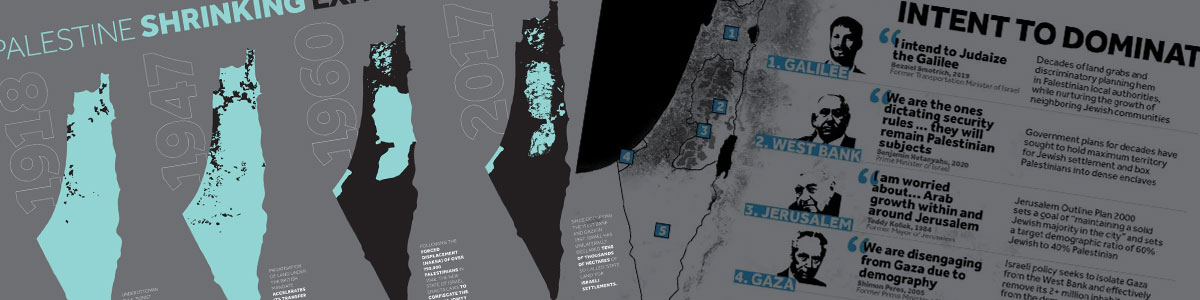
Just looking at the brief history of the manufactured Zionist state of Israel since it's inception in 1948, we learn of the land known as Palestine being invaded and ruled by a tyrannical group of leaders who appear far from the good nature of Abraham. According to the official narrative, there has been constant violence, terrorism, false flags, and wars with the nation committing unspeakable horrors including genocide against the Palestinian people. All done mostly with the approval and funding of British and American political leaders whilst monarchies and religious leaders including Popes simply turn a blind eye. So not exactly the perfect example of God's chosen people unless we are talking about a different god? But are these leaders really Judean or are they infiltrators, imposters selected to be political figures who converted to the religion of Judaism and part of a plot to capture the region as in the past with the Herodian dynasty who were put in power by Rome?
Let's take a look at what Google's Ai says regarding these leaders backgrounds...
Prime Ministers of Israel (*Have changed their names).
| Name: | Term: |
| *David Ben-Gurion | (first time, 1948–53) |
| *Moshe Sharett | (1953–55) |
| *David Ben-Gurion | (second time, 1955–63) |
| *Levi Eshkol | (1963–69) |
| *Golda Meir | (1969–74) |
| *Yitzhak Rabin | (first time, 1974–77) |
| *Menachem Begin | (1977–83) |
| *Yitzḥak Shamir | (first time, 1983–84) |
| *Shimon Peres | (first time, 1984–86) |
| *Yitzḥak Shamir | (second time, 1986–92) |
| *Yitzhak Rabin | (second time, 1992–95) |
| *Shimon Peres | (second time, 1995–96) |
| *Benjamin Netanyahu | (first time, 1996–99) |
| *Ehud Barak | (1999–2001) |
| *Ariel Sharon | (2001–06) |
| Ehud Olmert | (2006–09) |
| *Benjamin Netanyahu | (second time, 2009–21) |
| Naftali Bennett | (2021–22) |
| Yair Lapid | (2022) |
| *Benjamin Netanyahu | (third time, 2022– ) |
Benjamin Netanyahu
Benjamin Netanyahu's birth name is Binyamin Netanyahu. He was born in Tel Aviv, Israel, in 1949. His father, Benzion Netanyahu (born Benzion Mileikowsky), was a historian and Zionist activist who adopted the Hebrew surname "Netanyahu" after the family immigrated to Mandatory Palestine in the 1920s. It was a common practice for Jewish immigrants at the time to adopt a Hebrew surname as part of the Zionist movement.
During the time the family lived in the United States, in his adolescence and later as a student at MIT, Netanyahu sometimes used the name Ben Nitay to make it easier for Americans to pronounce. He is also widely known by his nickname, "Bibi".
Is Mileikowsky a Polish name?
Mileikowsky (Russian: Милейковский, feminine Милейковская; Polish: Milejkowski, feminine Milejkowska; Hebrew: מילייקובסקי), sometimes Milikowsky or Milikovsky (Hebrew: מיליקובסקי), is an Ashkenazi Jewish surname, related to various villages named Milejków/Mileykovo, Milejki/Milyeyki, Mileikiai.
Benjamin "Bibi" Netanyahu (born 21 October 1949) is an Israeli politician and diplomat who has served as Prime Minister of Israel since 2022. Having previously held office from 1996 to 1999 and from 2009 to 2021, Netanyahu is Israel's longest-serving prime minister.
Source: Google Ai
Ariel Sharon
Ariel Sharon's birth name was Ariel Scheinerman (sometimes spelled Scheinermann). He later changed his surname to "Sharon" as part of a common practice of Hebraisation among Israeli pioneers and officials.
He was also widely known by his nickname "Arik"
Source: Google Ai
The surname Scheinerman has its roots in Eastern European Jewish communities, particularly among Ashkenazi Jews. The name is believed to derive from the Yiddish word schein, meaning bright or beautiful, combined with the suffix -man, which often denotes a person associated with a particular trait or occupation.
Source: https://lastnames.myheritage.com/last-name/scheinerman
Ehud Barak
Ehud Barak's original or "real" name is Ehud Brog. He hebraised his family name from "Brog" to "Barak" (which means "lightning" in Hebrew) in 1972, while serving in the military. This practice of hebraising names was common among Israeli officials and citizens, particularly in the early days of the state.
Source: Google Ai
The surname "Brog" has varied origins, often linked to Old English or Norse roots, potentially deriving from words for a marsh/badger (Broc) in the British Isles, a fortification/stronghold (Borg) in Scandinavia, or even Old French/German words for a shoe (brogue) or breaking/smithing, suggesting nicknames for people near marshes, from fortified places, or involved in trades like shoemaking or smithing.
Source: Google Ai
Shimon Peres
Shimon Peres' real name was Szymon Perski, born in Wiszniew, Poland (now Belarus), and he immigrated to Palestine as a boy before becoming a prominent Israeli statesman. He later adopted the Hebrew surname Peres, a variation of his original Polish name.
Source: Google Ai
The surname Perski (and variants like Persky, Perske) has Ashkenazi Jewish and Polish origins, primarily toponymic (place-based) or occupational, stemming from Eastern Europe (Belarus, Poland, Lithuania). It can derive from the village of Pershai in Belarus, the Yiddish word for peach (persik), or a Slavic term meaning "of the Persians" (Perski), often indicating a connection to a place or characteristic.
Source: Google Ai
Yitzhak Shamir
Yitzhak Shamir's original name was Yitzhak Yzernitzky (or Jazernicki), born in Poland; he adopted the Hebrew surname "Shamir" (meaning "thorn" or "rock") after emigrating to Palestine and joining the Zionist underground, particularly to evade British authorities.
Key Details:
Source: Google Ai
The surname
Yzernitzky (also spelled Yezernitsky, Ezernitzky, Jezernicky, etc.) has Eastern European, likely Slavic or Ashkenazi Jewish, origins. It is primarily a topographical or habitational surname, indicating that the original bearer lived near a specific geographical feature.
Source: Google Ai
The surname Jazernicki (sometimes spelled as Yezernitsky, Yizernitsky, or Ysernitzky) has Polish and likely Ashkenazi Jewish origins, and is a locational name.
Source: Google Ai
Menachem Begin
Menachem Begin's birth name was Menachem Wolfovitch Begin, born in Brest-Litovsk (now Belarus) in 1913; while a persistent urban myth claims he was born "Mieczysław Biegun," biographers and records confirm his original name was consistently Menachem Wolfovitch Begin, fitting the common practice of Israelis adopting Hebrew names.
Key Facts:
Source: Google Ai
The surname Wolfovitch (and variants like Wolfowitz/Wolkowitz) originates from Eastern European Jewish (Ashkenazi) and Slavic roots, combining the name "Wolf" (from Hebrew "Zeev," meaning wolf, or German/Slavic for wolf) with the Slavic suffix "-ovitch" or "-witz," meaning "son of" or "from," creating a patronymic or toponymic name signifying "son of Wolf" or "from the wolf family/place". It signifies lineage, often related to the Hebrew name Ze'ev (Benjamin's nickname), or a connection to places with "Wolf" in them, common in areas with historical Jewish populations, with Polish/Russian/German influences.
Key Components & Meanings:
Source: Google Ai
Yitzhak Rabin
Yitzhak Rabin's father was born with the surname Rubitzov. He changed it to "Rabin" after emigrating to the United States before moving to Palestine in 1917.
Yitzhak Rabin was born in Jerusalem with the surname Rabin.
Source: Google Ai
The surname Rubitzov (also spelled Rubinowitz, Rabinovich, etc.) is an Ashkenazi Jewish patronymic name that means "son of the rabbi".
Origin and Meaning
Notable Bearers
A prominent historical example is the family of former Israeli Prime Minister Yitzhak Rabin. His father, Nehemiah Rubitzov, was born in the area that is now Ukraine and changed the family name to the Hebrew name "Rabin" (meaning just "rabbi") after emigrating to the United States and then to Mandatory Palestine. Hebraising surnames was a common practice among Zionist immigrants to align with their new national identity.
Source: Google Ai
Golda Meir
Golda Meir's birth name was Golda Mabovitch, born in Kiev (now Ukraine) in 1898; she later adopted the surname Meyerson after marrying Morris Myerson, and then changed it to Meir to sound more Israeli, a change encouraged by David Ben-Gurion when she became Foreign Minister in 1956.
Source: Google Ai
The surname Mabovitch (and variants like Mabowitz) originates from Eastern Europe, likely Slavic or Ashkenazi Jewish, deriving from a patronymic form meaning "son of Mabo" or related to a word meaning "to be able," often associated with Jewish families, notably the family of former Israeli Prime Minister Golda Meir (born Mabovitch). The Slavic "-ovich" or "-witz" suffix signifies descent.
Key Origins & Meanings:
Famous Example:
Variations:
In essence, Mabovitch points to Eastern European heritage, most commonly Jewish, signifying lineage through a paternal ancestor.
Source: Google Ai
Levi Eshkol
Levi Eshkol's real name was Levi Yitzhak Shkolnik (or Shkolnik/Skolnik), born in Oratov, Ukraine (then part of the Russian Empire) in 1895, and he adopted the Hebrew surname Eshkol when he immigrated to Palestine.
Source: Google Ai
The surname Shkolnik (Школьник) is of Eastern European Ashkenazi Jewish origin, deriving from the Slavic word for "school" or "scholar," meaning "student," "scholar," or "sexton" (synagogue caretaker). It reflects a strong emphasis on education in Jewish culture, potentially given to someone connected to a religious school (yeshiva) or synagogue, or even a "school man" (elder/sexton).
Origins and Meanings:
Variations:
Source: Google Ai
David Ben-Gurion
David Ben-Gurion's birth name was David Grün (or Gruen/Grüen), and he was born in Płońsk, Poland, in 1886; he later adopted the Hebrew name Ben-Gurion (meaning "son of a lion cub") as part of his Zionist identity, reflecting the common practice of "Hebricising" names for the new nation.
Source: Google Ai
The surname
Grün (and its variants like Gruen, Grun) originates primarily from German, meaning "green," serving as a nickname for someone living in a leafy place, wearing green, or having a connection to nature, or as a habitational name from places like Grünau. It's also an artificial Ashkenazic Jewish name meaning "green," adopted for its pleasant sound and association with nature, and can stem from Low German words related to sand or grain in some English contexts.
Source: Google Ai
Moshe Sharett
Moshe Sharett's birth name was Moshe Shertok (משה שרתוק). He was born in Kherson, Ukraine, in 1894, and later changed his surname to Sharett, which means "one who serves" or "fulfills his duty" in Hebrew.
Source: Google Ai
Chertok : Jewish (from Belarus): nickname for a wicked man a diminutive of East Slavic chort chert ‘devil’. Origin: Jewish
Source: https://en.geneanet.org/surnames/CHERTOK
Noah's Family Tree
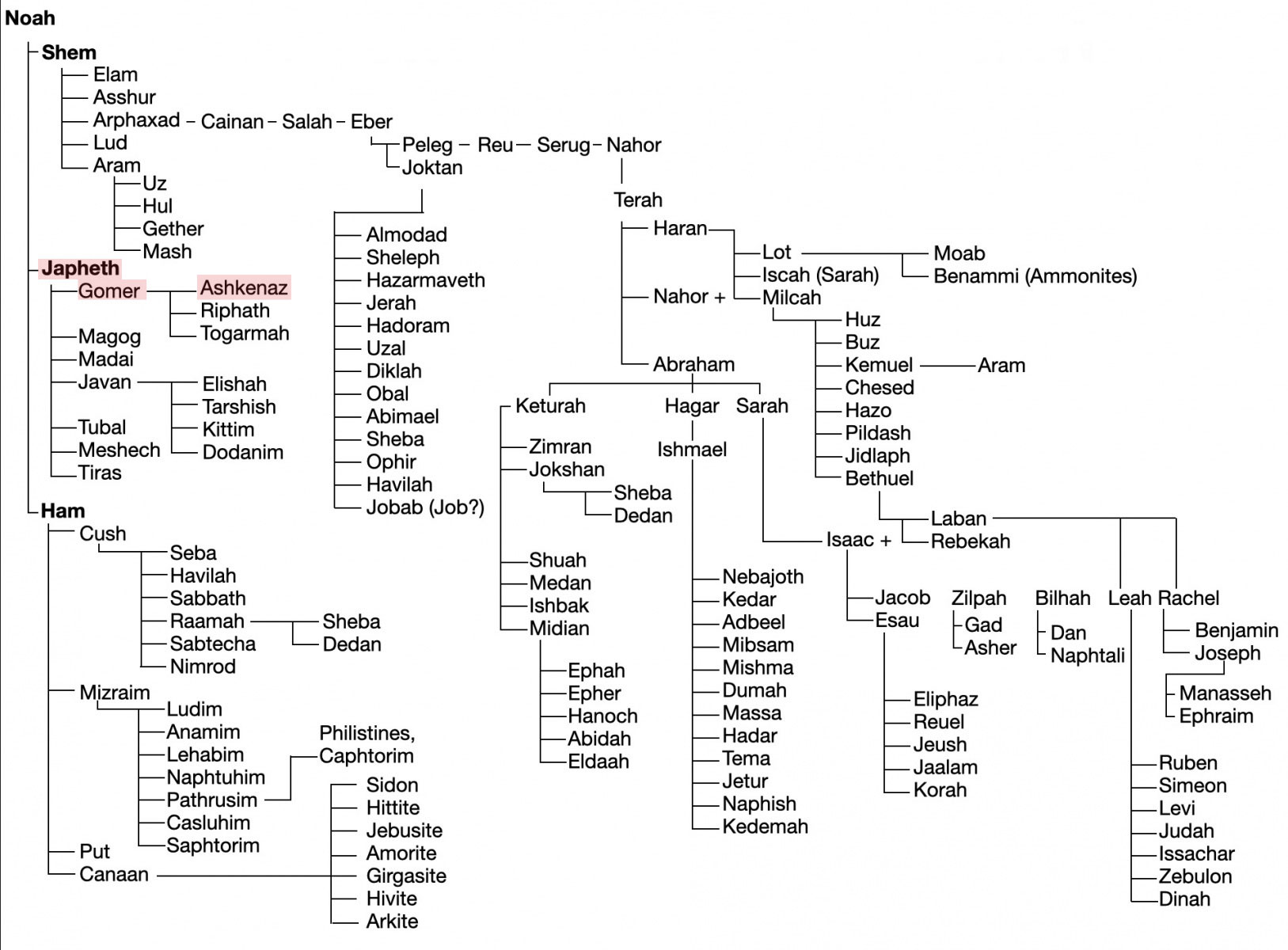
Ashkenaz
Was a biblical figure, a descendant of Noah (son of Japheth), listed in the Table of Nations (Genesis 10:3) as the son of Gomer, brother to Riphath and Togarmah, and traditionally considered an ancestor of European peoples, particularly Germanic tribes. The name "Ashkenaz" later became the Hebrew and Yiddish term for Germany and Central Europe, leading to the identification of "Ashkenazi Jews" as Jews from these regions.
Source: Google Ai
Important: A person of Ashkenazi origin would not be called a Semite but rather a Japhethite.
John Hopkins DNA study Isreali population Ashkenazi
Based on available information, former Johns Hopkins postdoctoral researcher Dr. Eran Elhaik conducted studies on the Ashkenazi Jewish population, proposing a theory of "Khazar ancestry" rather than solely Middle Eastern origins. His research involved genomic data analysis to trace the ancestry of the Ashkenazi population, sometimes challenging the dominant consensus on their genetic history.
Key aspects of this research area include:
These findings have been topics of debate within the field of population genetics.
Source: Google Ai
Was Ukraine once Khazaria?
Yes, significant parts of modern-day Ukraine were included in the medieval Khazar Khaganate, a powerful Turkic empire that existed between the 7th and 10th centuries. The Khazar empire spanned from the Caucasus and Volga-Don region in Russia westward across the steppes, including the Crimean Peninsula and southern Ukraine up to Kyiv.
While historical Khazaria included parts of Ukraine, it was a multi-ethnic, multi-religious empire rather than a direct, singular, ancestral predecessor to the modern Ukrainian state.
Source: Google Ai
Earthly Jerusalem
Jerusalem mean founded peaceful and from all biblical accounts it was God's city where he would establish a peaceful nation who were to be a light to all the nations. To Satan, the adversary and strong man that we read of during Christ's ministry, Jerusalem had become the habitation of devils, and the hold of every foul spirit, and a cage of every unclean and hateful bird. Jesus bound the strong man, and cast out the unclean spirits, He healed the sick and gave sight to the blind but still the authorities revolted against Him, Jesus said their house was left to them desolate. In 70 AD the city and the temple was destroyed and the people scattered. Since it's destruction there has been many foreign invasions in particular the accounts of the crusades by the Roman Catholic Church and her associates but for the most part we learn of Judeans, Arabs, Christians, and Muslims living in peace side by side up until recent times with the creation of the Zionist state. There is also great focus on the building of a third temple when John speaks of the heavenly Jerusalem having no temple.
Heavenly Jerusalem
Revelation 21 speaks of a new Jerusalem descending out of heaven from God. This demonstrates that earthly Jerusalem was no more where God would dwell, it was left to it's inhabitants desolate as Jesus said. We learn of the same in Ezekiel which speaks to a spiritual city with God leaving earthly Jerusalem to return to this heavenly place. Those who keep the commandments of God and have the testimony of Jesus Christ are the stones that make up the heavenly city, it is a beautiful metaphor. The description of the city speaks of an appearance of clear glass like crystal, speaking to a place of transparancy, where there are no secrets or hidden agendas, it is a place for those who have repented, overcome, and submitted their soul to Jesus Christ, having nothing to hide from the Father and His Son.
And there shall in no wise enter into it any thing that defileth, neither whatsoever worketh abomination, or [maketh] a lie: but they which are written in the Lambs book of life.
Revelation 21:27.
And I saw no Temple therein: For the Lord God Almighty, and the Lamb, are the Temple of it.
Revelation 21:22.
The fourth beast that devours the whole earth
There have been many who have profited from the endless wars since the Zionist's state inception. America has annually given more foreign aid to Israel than any other nation by a long shot. This vast amount of annual aid of billions of dollars would certainly ensure the creation of an economical and military power house in the middle east allowing the west to destabilise the entire region under the guise of spreading democracy and western values. We are told that it was Britain and the Rothchild international banking dynasty who set up the project of creating the state, and it was allegedly financed with Rothchild money who are also believed to be the guardians of the Vatican's wealth. Rothchild (red shield) are also allegedly of Ashkenazi origin. The family is sometimes linked to the "Bauer" name via earlier ancestors. Edom also means red and is associated with Esau who was Jacob's (Israel's) twin brother.
Afghanistan, Iraq, Lybia, Syria, Lebanon and many other nations have come within the western cross hairs of destruction and regime change and it is not a stretch to suggest that none of this would have been possible without the Zionist state. It is believed that these nations that were branded as "rouge" and "axis of evil" were not under the Rothchild international banking monopoly. If there is a plot to create a one world government and new world order, then all nations that were opposed would need to be overthrown. All these events coincide with the Daniel 7 prophecy of the fourth beast which eventually devours the entire known earth and tramples it down. The fourth beast being identified long ago as being Rome. In order to go un noticed Rome would need to create many distractions pushed up front to deflect suspicion in order to fulfil it's ambition and the prophecy. The creation of the Zionist state creates the perfect cover and an eventual scapegoat.
Not as though the word of God hath taken none effect. For they are not all Israel, which are of Israel. Nor because they are Abraham’s descendants are they all his children. On the contrary, “Through Isaac your offspring will be reckoned." Romans 9:6-7.
Parable of the fig tree
Behold the fig tree, and all the trees; When they now shoot forth, you see and know of your own selves that summer is now close at hand. So likewise you, when you see these things come to pass, know that the kingdom of God is close at hand. Verily I say unto you, This generation shall not pass away, till all be fulfilled. Heaven and earth shall pass away: but my words shall not pass away.
Luke 21.
Note: The fig tree represented Israel and the other trees were the other nations. There are patterns that are repeating, the fig tree is shooting forth her leaves along with the other nations and there has never been a greater time to seek Jesus Christ, His ministry and His divine counsel. What has been done, will be done again, and there is nothing new under the sun.
Putting on the New Self
But now you must put aside all such things as these: anger, rage, malice, slander, and filthy language from your lips. Do not lie to one another, since you have taken off the old self with its practices, and have put on the new self, which is being renewed in knowledge in the image of its Creator. Here there is neither Greek or Jew, circumcised or uncircumcised, barbarian, Scythian, slave, or free, but Christ is all and is in all. Therefore, as the elect of God, holy and beloved, clothe yourselves with hearts of compassion, kindness, humility, gentleness, and patience.
Colossians 3:8-12
Related: Subject to the goverment of man or to the higher powers of Christ?
Related: The Parable of the tares
Related: The Parable of the tares explained
Related: The Parable of the Wicked Tenants
Related: With Full Intent: Israel's Brutal Attack on the USS Liberty